CrossFit foot health: exercises and products to improve your footprint
|

In CrossFit we take care of the core, the snatch technique or Fran's times. But how often do you think about your feet?
Your feet are your only base of contact with the ground in most movements. They affect your balance, the efficiency of your lifts and your risk of injury. If you neglect them, you pay for it in the form of overuse, fasciitis, stiff toes or chronic pain.
In this article you will learn:
- And what mistakes to avoid if you're just starting out.
- Why foot health is key in CrossFit.
- How to detect if you have limitations.
- What exercises and products you can use to improve.
What does a natural foot look like?
A natural foot is one that has not been deformed by the use of footwear. It is wide at the base and has separation between the toes, especially between the big toe and the rest, creating more stability and adaptability to different surfaces.
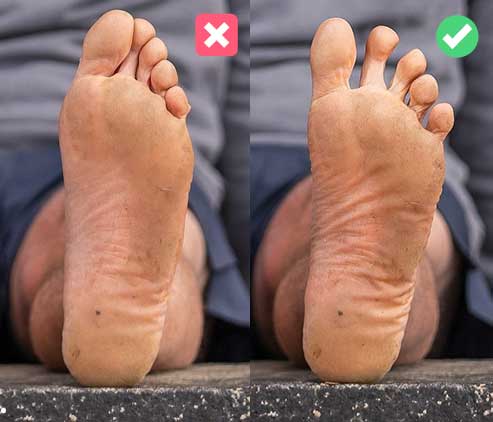
The foot is made up of 33 joints, 26 bones and more than 100 tendons, muscles and ligaments. It is very important that all components fit together correctly between them so that they function in a healthy way.
When we use for most of the day footwear that is also not respectful (more on the characteristics of this type of shoe later). we atrophy this entire structure which is becoming weak and losing functionality.
How Foot Health Affects CrossFit Performance
The foot acts as a base, spring and stabilizer. If that base is limited, your body compensates in other areas: knees, ankles, hips or back.
Real examples:
- Pistols: If there is no mobility in the ankle and toes, you compensate with the knee inward.
- Snatch: A collapsed arc destabilizes the lifting reception.
- Running or jumping: If the toes are stiff, there is no good propulsion. The impact is absorbed by the fascia or the heel.
Feet are not only support. They are transmitters of strength and balance.
Common foot problems in athletes
- Rigid or mounted fingers: You lose contact surface and muscle activation. Limited mobility of the big toe directly affects the propulsive phase of running [study]
- Collapsed arch: Unstable support, plantar fatigue and knee overload.
- Plantar fasciitis: Acute pain on support, especially on waking or after long workouts.
- Lack of mobility in the big toe: It makes walking difficult and affects posture.
- Ingrown toenails or discomfort caused by inappropriate footwear.

What to do to restore healthy feet?
Not all damage is repairable, but your feet can reverse part of it and return to better structure, toe clearance and functionality.
After having been wearing shoes with cushioning, structures and compression, they need an adaptation process before jumping right into walking or running without barriers.
Exercises to improve foot mobility and strength
Do them barefoot, on a firm surface, 2-3 times a week. No material is needed.
|
Exercise |
Target |
Duration . |
Level |
|---|---|---|---|
|
1. Separation of fingers |
Activate intrinsic muscles |
3 x 15 seconds |
Easy |
|
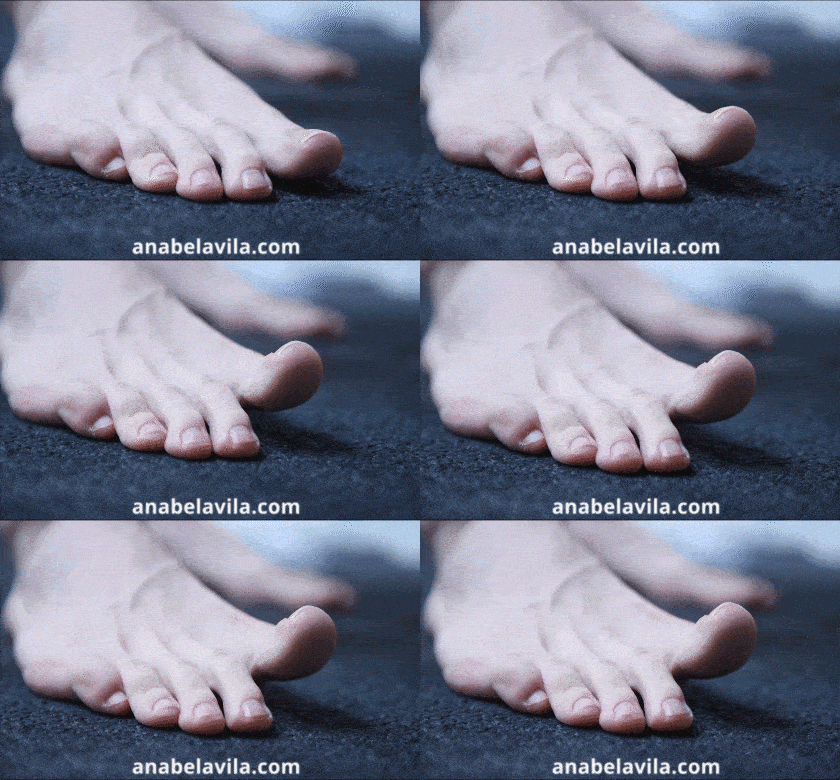
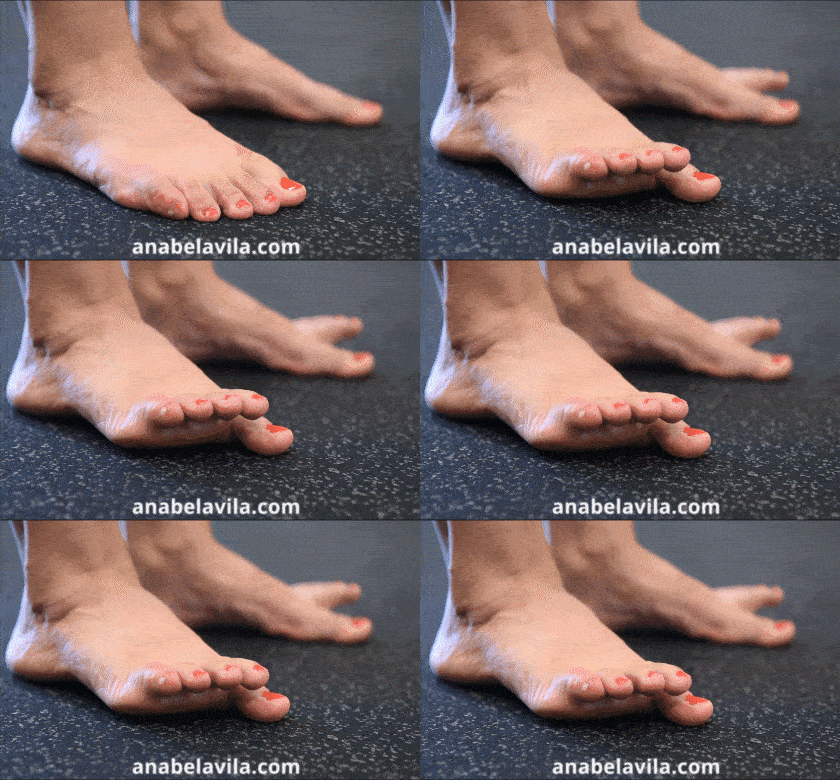
2. Controlled lifting |
Neuromuscular dissociation |
3 x 10 repetitions . |
Medium |
|
3.Walking on tiptoe |
Strengthen fascia and calf muscles . |
3 x 30 seconds |
Medium |
|
4. Ball massage |
Release adhesions and tensions . |
2 min per foot . |
Easy |
|
5. Assisted flexion/extension . |
Increase range of motion . |
3 x 10 repetitions |
Medium |
Tip: If you cannot move the fingers separately, use the hand at first to guide the movement.
Exercise 1
Exercise 2
What mistakes to avoid
- Do the exercises with slippers on.
- Forget to warm up or stretch before use.
- Expect results in 3 days.
- Ignore other key areas such as the ankle or hip.
- Wearing shoes with a narrow toe box or with too much drop.
Products to activate and exercise the feet
Massage ball
We are accustomed to walking on smooth, flat surfaces that have withdrawn a variety of stimuli from our feet, which are actually designed to move over all types of terrain.
Use a lacrosse ball to massage the sole of the foot. This exercise activates your proprioceptive system, recovers sensitivity and mobility by releasing the fascia. In this post we cover the details of the myofascial massage.
Here are a couple of options. The more varied the stimulus the better:
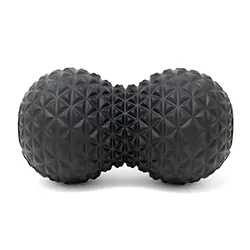
Infinity Ball
*Use the code: ANABELPUMP for a discount
This post is dedicated exclusively to foot exercises with the Velites Infinity Ball. But it is also useful for the one you already have.
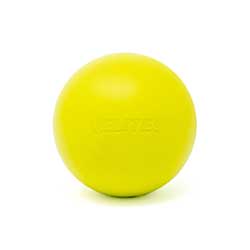
Lacrosse Ball
*Use the code: ANABELPUMP for a discount
Finger spreader
What it is: Anatomical separator made of medical silicone.
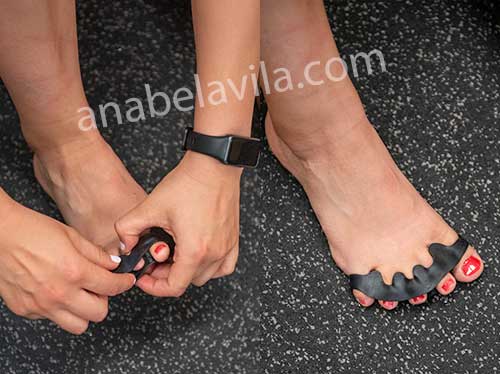
Advantages:
Ideal if: You have bunions, crossed toes or are looking for a precise tool to widen your stride.
It is recommended that you use at the beginning for 10 minutes and according to the sensations you decide to increase progressively.
At first it may be an uncomfortable sensation and you may even notice cramps if your toes were very atrophied. People with less atrophied feet notice that their feet feel more relaxed after using it.
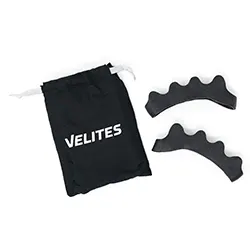
Separators
*Use the code: ANABELPUMP for a discount
Cheaper alternative on Amazon
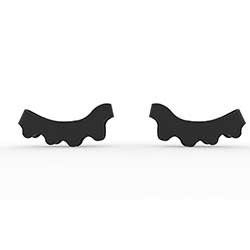
TOE SPACERS
Why not always wear shoes?
We walked barefoot for millions of years until we invented shoes that caught them. What was supposed to be a step forward in comfort turned out to be a backward step in health because:
Take back your nature and feel again the pleasure of walking barefoot.
It doesn't mean that you won't wear sneakers again, but keeping in mind all of the above:
If you are interested in the subject, you can go deeper in this book that I highly recommend. Very easy to read and with great learnings.

In the book, you will discover the importance of the feet as an extension of our identity and a tool to communicate our emotional state. You will learn how it is possible to train them to maintain a healthy posture and prevent muscle and bone problems. With practical exercises photographed so you can follow them without any problem.
[/trp_language]
Walk barefoot
Whenever you can, this is the best way to treat your feet, set them free!
At home, you can use the Rock Mat therapeutic mat made of firm foam that applies pressure to specific parts of the sole of the foot. Its benefits:
- Relieves tension
- Stimulates thousands of nerve endings
- Training proprioception
- Improves circulation
- Promotes relaxation and reduces pain
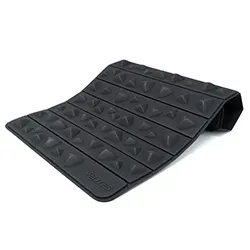
Pebble mat
*Use the code: ANABELPUMP for a discount
At least at home you should not wear shoes. The next step would be to take advantage of walks in nature (beach, grassy areas) to recover our natural feet.
In addition, having your feet in direct contact with nature (known as earthing/grounding) has extra benefits for your health.
What is respectful footwear?
Respectful footwear is a minimalist footwear that will help you when you can't go barefoot knowing that at least you have chosen a good shoe.. This type of shoe allows you to continue to have normal foot functionality while offering protection, but without altering the basic movement pattern.
In Effects of Minimalist Shoes on Plantar Intrinsic Foot Muscle Size and Strength is a 2023 study conducted in a systematic review showed that the use of minimalist footwear can increase intrinsic foot muscle strength by 9 % to 57 % in healthy people.
Requirements for this footwear:
- Wide toeThe first thing to do is not to compress the fingers and push the big toe towards the center.
- Flexibleshould not restrict the movement of the foot in any direction.
- Minimum droprefers to the heel rise (difference between the heel and the metatarsal). The ideal would be zero, but conventional shoes usually have a drop. But it is advisable to make a gradual reduction, a good starting point is to reduce the heel drop by 4-8 mm.
- No cushioningthin sole, which protects, but at the same time allows you to feel the ground.
In this article you can study in more detail how to choose a good minimalist shoe.
Evaluate your progress
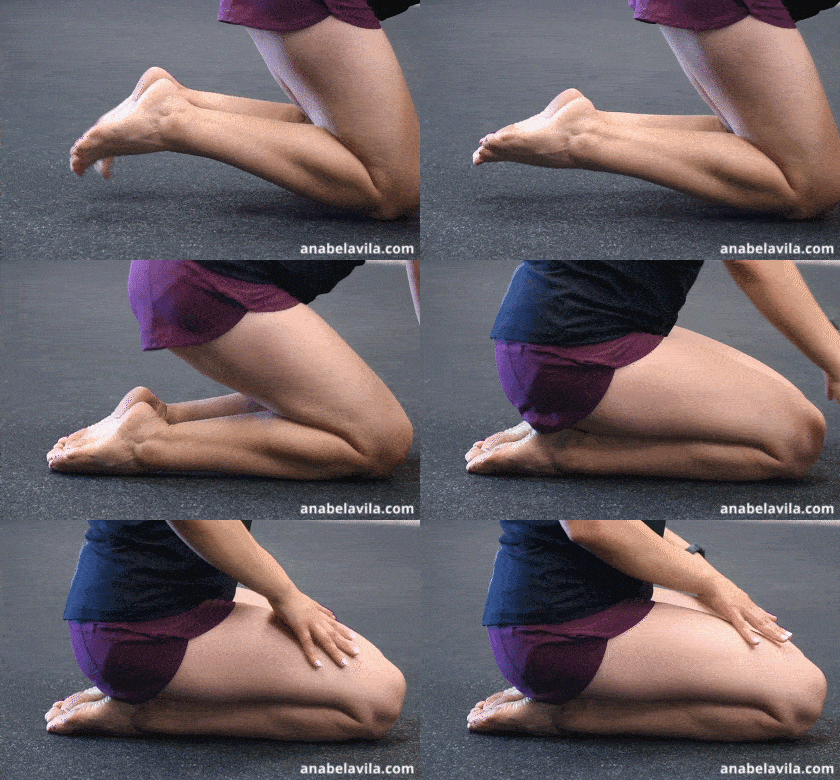
Can you sit comfortably on your knees with your instep on the floor?
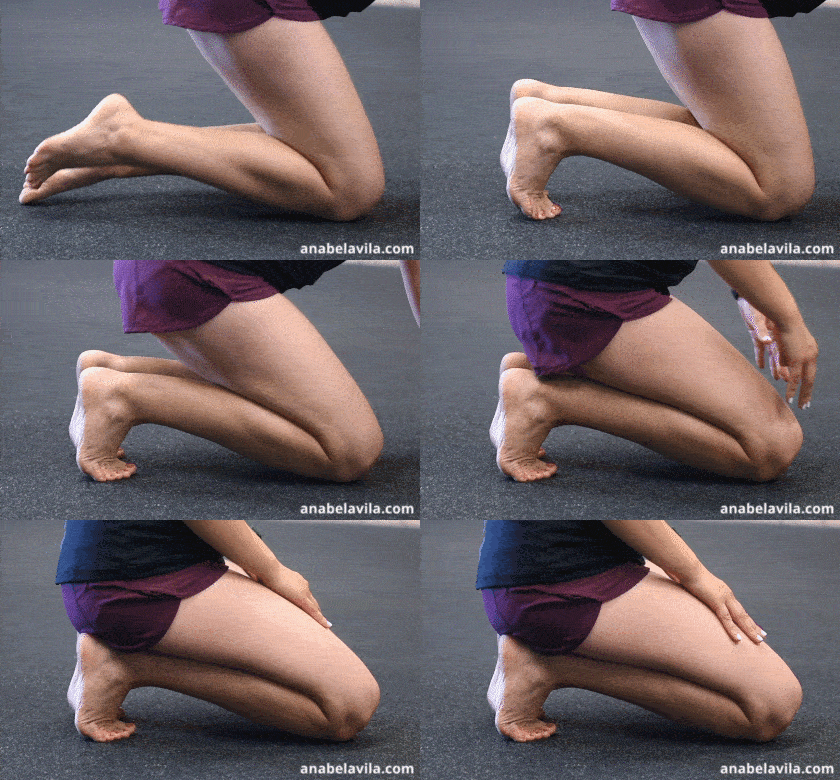
Can you sit comfortably on your knees supporting your fingers?
Can you move your toes independently?
My personal experience
In my early years of CrossFit I completely ignored foot health. I wore very tight shoes, didn't stretch, and overloaded when running (especially the tibia area).
When I started working on mobility with exercises and using spacers, my balance improved, I eliminated plantar fatigue and regained foot strike sensitivity.
Since 2020 I started with the adaptation to barefoot and nowadays all the shoes I use either to do CrossFit or not. And above all, I try to be barefoot whenever I can. At home we don't have «slippers at home», we are from the tribe of the black feet 😛 who wash them before going to sleep ;=)
If reading the rationale for discalcism makes you think it makes perfect sense, once you try it there is no turning back.
Conclusion
Your feet are the foundation of everything you do in CrossFit. If you take care of them, everything improves: technique, strength, recovery and injury prevention. You don't need to spend a lot or have a complicated plan. Just consistency and attention.
Frequently Asked Questions
How many times a week should I train foot mobility?
With 2-3 times is enough to maintain it. In the initial phase, you can do it daily.
Are these exercises useful for plantar fasciitis?
Yes, they help to release tension and strengthen the fascia. But if there is acute pain, consult a physio.
What kind of shoes do you recommend for CrossFit training?
One that gives you room in the toe box and has a stable sole. Vivobarefoot or Reebok Nano with spacers outside of training.
Can I use separators during the WOD?
Correct Toes yes, if your shoe allows it. Others, only for stretching.
Does this also work if I am a beginner or older adult?
Yes, taking care of your feet is important at any age. Just adapt the intensity.
This content is for informational purposes only and is not a substitute for consultation with a qualified healthcare professional.