CrossFit shin guards review and analysis
|

If you have ever finished a WOD of Deadlifts with shaved shins or have suffered a rope burn (rope burn) during a climb, you know that protection is not a luxury, but a necessity. CrossFit shin guards aren't just a pair of compression socks; they're a shield designed to keep your skin intact and your focus on training.
The problem is that most of the reviews focus on soccer shin guards, which are useless for the rope climb. As a trainer, my objective is twofold: to find the maximum protection without sacrificing mobility.
In this guide, based on direct experience with the leading brands in the box, we'll discuss which materials work best against rope friction and bar rubbing, and I'll give you the definitive comparison charts to choose the model that will keep you training without scarring.
If you want to stop finishing your WODs bleeding and without shin guards moving, this guide is for you.
This post contains affiliate links for which we receive a small commission and that in no case means a price increase for you. Thank you for your support.
When to use shin guards?
It can be really useful to protect you in different exercises:
Deadlift
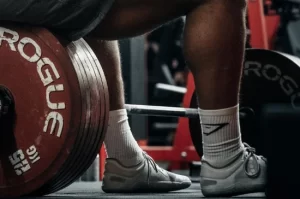
When we keep moving the bar with so much weight in front of our shins, we can easily end up hurting ourselves. This is definitely a good time to put them on.

Rope climbs
There are several ways to climb the rope, but whichever way you use, if you use your feet as an aid, the rope rubs and can become a burn. Undoubtedly one of the exercises in which even those who do not like to wear any kind of protective accessory, have to end up using.

Box jumps
Initially, the nature of this exercise does not imply a constant rubbing of the shin. In practice, I have seen many shins with stitches from failing to jump or tripping.
The choice of material: Thick padding (Neoprene) or maximum mobility (Lightweight covers)?
For CrossFit, the shin guard material must resist constant lateral friction and light impacts from the bar.
1. Reinforced neoprene
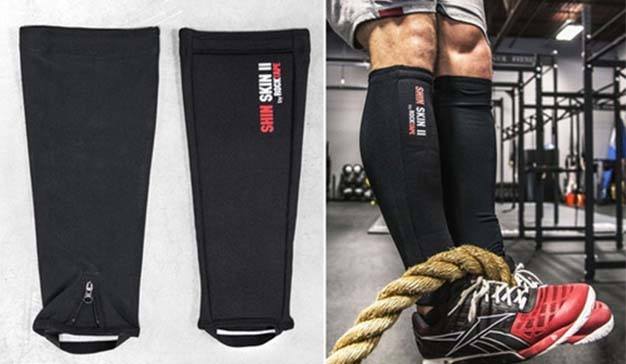
- Description: Material similar to that of knee pads or surf covers. It offers a dense padding, generally made of 5 mm thick, in the front area.
- Ideal for: Rope Climbs intense and Deadlifts heavy. Provides warmth to the calf (compression) and maximum protection against abrasion.
2. Compression sleeves with internal cushioning
- Description: A compression stocking (Nylon or Lycra) with gel or thin foam plates sewn inside.
- Ideal for: WODs with Running or high mobility, where the Deadlift is not extremely heavy. They are cooler and more discreet.
3. Stiff shin guards (the ones to avoid) ⚠️
- Description: Hard plastic or carbon fiber shin guards designed for contact sports (soccer, MMA, etc.), muay thai).
- Ideal for: Frontal impact (kicks, collisions).
- Reason to avoid them: They are useless against lateral abrasion (the biggest risk in CrossFit) and its stiffness interferes with the movement of the bar during the Deadlift.
Comparison table: neoprene vs. compression
|
Feature . |
Reinforced neoprene . |
Compression sleeve with padding . |
|---|---|---|
|
Padding Thickness . |
Height (5 mm) . |
Low to Medium (2-3 mm) . |
|
Rope Protection . |
Maximum. Superior resistance to friction and heat. |
Good. Protects against minor chafing, but may fail in long WODs with lots of rope. . |
|
Bar Protection . |
Excellent. Cushions deadlift shock or constant rubbing well. . |
Sufficient. Good for rubbing, but less so for accidental knocks. |
|
Breathability |
Medium. Tends to retain more heat and sweat. . |
High. Very breathable and more comfortable in hot WODs. . |
|
Purchasing Approach . |
If your focus is on the heavy force and the Rope Climb. . |
If your focus is on the mobility and the Metcons dynamic. . |
Comparison table: top box models
Here's a comparison of the neoprene shin guards most commonly used by CrossFit athletes, focusing on key functionality:
|
Attribute / Model . |
RockTape RockGuards . |
Reband Shin Guards . |
Alternative (Generic Neoprene) . |
|---|---|---|---|
|
Main Focus . |
Abrasion protection, Warmth, Tubular design. . |
Grip, Comfort and Protection Premium. . |
Basic functionality (Deadlift/Rope). . |
|
Material |
Thick neoprene 5mm . |
High density neoprene and Lycra. . |
Neoprene 5mm or 3mm. . |
|
Clamping system |
Side zipper + foot stirrup. . |
Tubular (slides, no zippers) . |
Top/bottom Velcro or single tubular. . |
|
Resistance to Rope Climb . |
Excellent. The neoprene is robust and offers plenty of surface protection. . |
Excellent. The snug fit with stirrup minimizes vertical slippage. . |
Very good. Density offers good protection. . |
|
Mobility (WOD) . |
Good. Tubular design is comfortable, but can be slower to put on/take off. . |
Maximum. Perfect fit that does not disturb in the Clean nor in the race. . |
Average to good, depending on the setting. . |
|
Price: . | . | . | . |
📝 My opinion on the models
- RockTape RockGuards: They are known for their durability and the warmth provided by their neoprene, making them ideal for athletes who require compression and thermal protection on the calf in addition to the shield. Its main feature is the tubular simplicity.
- Reband Shin Guards: These focus on the fastening and adjustment premium. The use of the rack and foot stirrup makes them extremely stable, guaranteeing that do not move not a millimeter during the most dynamic WOD or fast rope climbs.
Trainer's conclusion
It seems that only for two exercises it is not worth having shin guards but if you have suffered a burn from the rope, or you have bruised your knees with the deadlift or... even worse you have fallen from the drawer and you have even had to get stitches; you will confirm with me the great utility of an accessory that only costs 30 € and can save you a few evils.
My recommendation, I have used both Rehband and Rocktape and recommend both, it will depend on whether you prefer zipper or compression. The rocktape ones are less constricting because they have the zipper and tape but sometimes the zipper would dig into me. The Rehband can be more comfortable but once you wear them, as they are compression they are harder to put on.
FAQ: Frequently Asked Questions about CrossFit Shin Guards
Do I need shin guards if I wear high compression stockings?
Compression stockings (high socks) are useful to prevent minor chafing and to provide some warmth, but are not enough to protect against severe rope burns (rope burn) or a direct hit from the bar in a heavy deadlift. The neoprene shin guard offers multi-millimeter density padding that compression stocking cannot match.
Can they be washed in the washing machine?
Yes, but with caution. Most manufacturers (Picsil, Earwaves) recommend hand washing with cold water and neutral soap. If you use the washing machine, put them in a protective mesh bag and use a gentle cycle so as not to damage the seams, neoprene or, if present, the zipper/Velcro system. Never put them in the dryer; they should be air-dried.
Does the thickness of the shin guard affect Olympic lifts (Clean & Jerk)?
Generally, no. Although a 5 mm neoprene adds a slight bulk, the bar in a Clean or Snatch should only briefly rub the shin in the first phase of the lift. The shin guard should not interfere with technique, but it does prevent pain or injury caused by rubbing against the bar, which can improve your confidence in the lift.
What size should I choose if I am between two sizes?
If you are between two sizes, you must prioritize the snug fit to prevent slippage. The neoprene will give slightly with use. If the shin guard is too loose, it will move down with the movement of the bar or the friction of the rope. Opt for the smallest size if you prefer maximum safety and grip.