Best knee pads for CrossFit 2025: real analysis, comparison and recommendations.
|
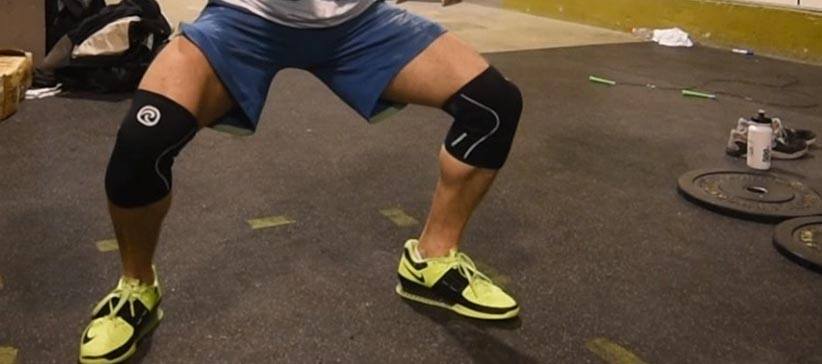
Choosing the right knee brace is crucial to improve your performance and protect your knees in the box. This accessory is no longer just for weightlifters or people with injuries. At CrossFit, knee pads stabilize your joint, reduce ligament tension and retain heat. This translates into more safety during heavy lifting (such as the Snatch or Clean and Jerk) and a better muscle response in the WODs more demanding.
As an athlete and trainer with ten years in the industry, I have tested over twenty different models. This guide focuses on the actual performance, the feeling in heavy squats, and the specific need of athletes to CrossFit. Stop spending money on knee pads that will only bother you. I show you how to choose the perfect thickness and size for your training.
This post contains affiliate links for which we receive a small commission and that in no case means a price increase for you. Thank you for your support.
Why knee pads are your best ally (and the science behind it)
The knee joint withstands repetitive loads and high compressive forces during weight training. CrossFit. The purpose of the knee brace is to manage that load safely.
What are CrossFit knee pads for?
Knee pads are designed to provide extra support to the joint and counteract compressive forces caused by weight, landings or other forces during CrossFit training, protecting your knees from injury. This accessory helps increase blood flow and reduce pain and swelling in the knee joint during and after exercise, and are common in CrossFit, weightlifting and powerlifting.
Key statistics that support your usage
- Reduction of joint risk: The knee is the third most injured area in the world. CrossFit, representing the 8.3% of all injuries, just behind the shoulder and lower back (Orthopaedic Journal of Sports Medicine, 2018). The knee brace support helps to manage this exposure.
- Injury rate: The incidence rate of injury in functional training is similar to that in weightlifting, with up to 3.1 injuries per 1,000 hours training (Orthopaedic Journal of Sports Medicine, 2019). The use of knee pads for heavy lifting is part of the prevention strategy.
- The power of compression: Neoprene generates heat and compression. Compression improves proprioception (awareness of joint position) and increases blood flow. This accelerates the elimination of lactic acid and reduces post-workout swelling (Source: Sports compression studies).
Unlike orthopedic knee pads, CrossFit knee pads are designed to withstand explosive movements and high impacts in the box.
When should we use Crossfit knee pads?
It is typical to see in the box that, before starting the WOD, attendees put on a variety of accessories, including sports knee pads.
However, it is not recommended to use them in every training sessionThe excessive use may alter the natural movement of the joints.
They are useful for working with weights greater than 75% of maximum weight in weightlifting movements, such as the heavy squat, clean and snatch, or in exercises with lunges or pistols.
Why is it not always advisable to use knee pads when training?
Continued use of compression knee braces can reduce the strengthening of your jointsIt is therefore more effective to reserve them for specific times during training. In addition, on a psychological level, it can generate some dependence, making it difficult for athletes to rely on their own ability instead of relying on CrossFit accessories.
Types of knee pads
CrossFit knee pads are designed to offer support, protection and stability during intense training sessions. Some include ergonomic and non-slip designs to ensure comfort and safety during training, being an essential accessory to prevent injuries and optimize performance. What types can be found in the market?
Depending on the material
Depending on this characteristic your level of understanding will vary.
- Cloth sleeves (cloth sleeves): Level of Low level of compression and higher heat, ideal for recovery.
- Neoprene Knee Pads: Level of Medium level of compressionperfect for injury prevention and for those looking for additional support in CrossFit.
- Knee Wraps: High compressionrecommended for powerlifting.
According to thickness
You should choose the thickness based on your primary objective within CrossFit.
- 3 mm (resistance and metcons): Minimal restriction. Use them for WODs long with lots of dynamic movements, box jumps or for the running and endurance part of your training.
- 5 mm (CrossFit versatility): Perfect balance. Recommended for the athlete looking for stability in lifts (Clean and Jerk or Snatch) without sacrificing too much mobility for gymnastic exercises or burpees. This is the best-selling thickness for the multipurpose athlete.
- 7 mm (maximum strength): Maximum support. Reserve them exclusively for pure strength and weightlifting days, such as the 1RM back squat or deadlift auxiliary lift. Their stiffness may bother you on WODs with high repetition.
The 4 best knee pads for CrossFit (actual comparison)
This table summarizes my conclusions of use after testing each pair of knee braces in a variety of training environments from CrossFit.
|
Picsil HEX TECH |
Rehband RX |
RockTape Assassins |
Bear KompleX | |
|---|---|---|---|---|
|
Thickness |
5 mm and 7 mm |
5 mm . |
5 mm and 7 mm |
7 mm |
|
Material . |
Neoprene with hexagons . |
Neoprene SBR/Neoprene |
High quality SBR neoprene |
Neoprene . |
|
Best for |
Heavy weightlifting, Squats |
Versatility CrossFit (Classic) |
High-impact WODs, Tight fit . |
Powerlifting, Maximum compression . |
|
Stability (according to author) . |
9/10 |
8/10 |
8.5/10 |
9.5/10 |
|
Average price . |
*Use the code: ANABELPUMP |
Experience analysis
- Picsil HEX TECH: The hexagon design actually adds extra pressure focused on the kneecap. This offers a more locked-in feel, ideal for breaking your personal records in weightlifting. I do not recommend them for Metcons for its lateral stiffness.
- Rehband RX 5mm: It is the historical reference knee brace in CrossFit. Its patented anatomical fit is its strong point. It remains the most comfortable choice for WODs long where you need it to stay in place.
- RockTape Assassins: Lycra lining helps with breathability. They tend to be tighter than other brands in the same size. If you're looking for a very snug fit that almost restricts movement to generate rebound, choose this model.
- Bear KompleX: Knee pads of 7mm that are pure compression. Ideal for Powerlifting within the CrossFit or if you need maximum rebound to get out of the squat. Its stiffness requires a good warm-up.
How to use your knee pads: when to use them and when not to use them
Excessive use of knee braces can lead to psychological dependence and reduce the intrinsic strength of your stabilizing muscles. Use them as a tool, not a crutch.
- When to use them (SI):
- Lifts with more than 75% of your 1RM (Squats, Clean, Snatch).
- WODs that accumulate fatigue in the legs (e.g., 100 lunges o 150 wall balls).
- During warm-up with mild injury or chronic pain to retain heat.
- When NOT to use them (NOT):
- In general warm-up or stretching.
- WODs purely cardiovascular (rowing, running, rope).
- Technique training where you need to feel the natural movement of your knee.
Trick to put the knee pads on easily in CrossFit
To optimize the use of your CrossFit knee pads, correct positioning is essential for maximum support and comfort..
The most effective way to put them on is to turn them inside out, i.e. turn them inside out before inserting your foot through the narrowest part and bringing them towards your knee. Once adjusted, you can turn them back to their normal position. This method is especially useful in summer, when sweating makes it difficult to put them on easily.
Other uses of knee pads in training
Many crossfitters give knee pads a double function using them as shin guards for some exercises such as rope climbing often causes a lot of friction on the skin.
There are accessories specifically designed to protect this area of the leg when doing this exercise, but many people substitute it with the knee brace itself by dropping it over the ankle.

Maintenance of CrossFit kneepads
To extend the life of your knee pads and avoid odors, follow these simple steps:
- Ventilate them after training.
- Wash them regularly and, if possible, freeze them to eliminate bacteria.
Frequently asked questions about knee pads in CrossFit
Should I wear knee pads for every workout?
It is not necessary to use knee pads in every CrossFit session. It is recommended to reserve their use for those workouts that involve heavy loads or exercises that may put the knees at risk.
Which knee pads are best for CrossFit?
5 mm neoprene knee pads are usually the most recommended, as they offer a perfect balance between support and mobility. However, the choice depends on your specific needs and the type of training you do frequently.
How do I choose the right thickness of knee pads?
The thickness depends on your type of training:
- 3 mm for strength and metcons.
- 5 mm for varied CrossFit training.
- 7 mm for training focused on maximum strength