Best CrossFit Wristbands
|

Do your wrists hurt when you train, and you don't know which CrossFit wristbands to choose? This guide helps you figure it out.
Here you will find the best CrossFit wristbands modelswith real analysis, advantages and recommendations according to the type of training you do: strength, weightlifting or long WODs with gymnastics.
In addition, we compare types (rigid, elastic, nylon), explain when to use them and answer the most common questions. We also analyze two models of the brand Velites and of Picsil, so that you can choose the one that best suits your needs.
If you are looking to protect your wrists without losing mobility, this comparison will interest you.
Transparency: Content with affiliate links
This article contains affiliate links. This means that if you purchase through one of these links, I may receive a small commission at no additional cost to you. I only recommend products that I have tested, know well or consider useful for anyone who trains CrossFit. This commission helps me maintain the blog and continue to create honest, independent content.
Why use wristbands in CrossFit?
- In movements involving load on the wrist (push press, snatch, clean & jerk, handstand push-ups) the wrist is usually in a forced extension position. A wrist brace helps to stabilize it.
- You avoid discomfort or microtears in the tendon or joint capsule area.
- They allow you to concentrate the effort on the shoulder, not on stabilizing the wrist.
- But be carefulshould not replace wrist strengthening and should not be used all the time. Use them for heavy sets or high volume workouts.
When to use wristbands?
We can wear them when we move high loads or loads with which we are not yet comfortable because we have not adapted to them. In the latter case we would see them as an aid or support while we are working on wrist mobility and strength.
Other exercises in which we can get to move high loads and could benefit from the wrist straps are the different types of press (horizontal and vertical).
In gymnastic movements where there is a high compression such as HSPU or HSW we can take them into account if the volume of repetitions is very high or in the same WOD we find more exercises that can put more stress on our wrists.
Disadvantages of the use of wristbands: addiction
We must keep in mind that if we have to put on the wristbands as soon as we leave the locker room to do the warm up, push ups, move medium-low loads, hold the handstand position, ... Something is not right. In these cases we should:
Types of wristbands
|
Type |
Advantages . |
Disadvantages |
Recommended use |
|---|---|---|---|
|
Rigid / semi-rigid |
Maximum support, low deflection . |
Less mobility, more "hardened . |
Snatch, heavy press, maximum loads . |
|
Elastic / "flexible . |
Good balance between support and mobility |
Somewhat less rigid . |
WODs mixing weightlifting and gymnastics . |
|
Nylon (technical fabric) . |
Very light weight, better ventilation, more versatile |
Moderate support . |
WODs with high volume, mixed movements . |
Criteria for choosing wristbands
When deciding which wristbands to buy, evaluate:
- Length and widthmore material allows for more twists and more adjustment.
- Stiffness vs. elasticityHow much movement are you willing to sacrifice?
- Locking / fastening system: sturdy Velcro, double layer system, etc.
- MaterialCotton, polyester, nylon blend; reinforced seams.
- Comfort / abrasionthat do not dig, pinch, or pick at the skin.
- Sweat resistance / maintenancewashable, not deformed.
- Actual tests / experienceWhat other athletes say or how they behave in a real WOD.
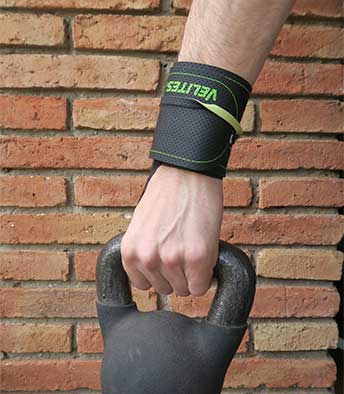
Velites vs Picsil Wristbands Comparison
Here is a comparison table of some interesting models from less rigid to more rigid:
Rotate the cell phone to see the table better
|
Feature . |
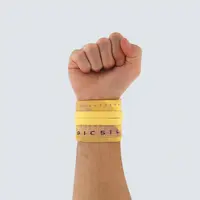
Picsil SS25 (Adjustable fabric) |
Velites Nylon |
Velites Core |
Picsil Powerlifting (Elastic) |
|---|---|---|---|---|
|
Image |
 |
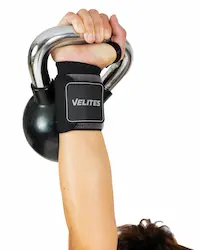 |
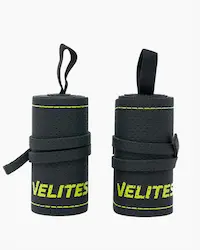 |
 |
|
Stiffness |
Low-medium . |
Media . |
Medium-high . |
High . |
|
Closing system . |
Loop without Velcro . |
Velcro . |
Twist-lock without Velcro . |
Velcro . |
|
Type of fabric |
Cotton |
Technical nylon |
Bi-material with microfiber |
Compressive elastic fabric |
|
Composition |
100% cotton |
Nylon |
Not publicly specified . |
80% polyester, 20% latex . |
|
Clamping level . |
Medium-low |
Medium |
High |
Very high |
|
Wrist mobility . |
Very high |
High . |
Medium-low |
Media . |
|
Comfort in long sessions |
Very high . |
High . |
Medium |
Medium . |
|
Load stability . |
Low-medium |
Media |
High |
Very high . |
|
Quick adjustment between series . |
Medium |
High |
Very high . |
High |
|
Learning curve |
Null . |
Null |
Medium. It is necessary to master the turn . |
Null . |
|
Recommended use . |
Gymnastics, light technique, volume WODs |
CrossFit and mixed WODs with light weightlifting . |
Technical Weightlifting: OHS, Snatch, C&J . |
Powerlifting and heavy lifting |
|
Key benefits . |
Breathable, soft, non-irritating . |
Versatile, lightweight, easy to adjust . |
Velcro-free high support, instant locking and unlocking |
Strong compression, high stability . |
|
Limitations |
Limited support at high loads . |
Falls short in demanding 1RM . |
Less comfortable for high mobility . |
May give way somewhat with intensive use |
|
For whom |
Who prioritizes comfort and range of motion |
Versatile profile that does it all . |
Who is looking for technical support without Velcro |
Who needs maximum support for strength |
|
BUY using the code: ANABELPUMP | . |
Use tape
Another option is functional bandages with tape for CrossFit.
These can be useful in athletes or patients who are recovering from an injury. They allow us to be more specific in the area we want to stabilize or give a compression stimulus.
They must be prescribed by a physiotherapist.
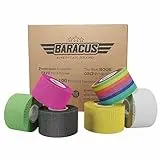
BARACUS Tape
Which wristband to choose?
- If you prioritize maximum support: Picsil Powerlifting
- Si you train technical weightlifting movements: Velites Core
- If you are looking for versatility for WODs or general CrossFit: Velites Nylon
- If you prefer comfort and breathability for daily or gymnastic use: Picsil SS25 (fabric)
Tips for use, maintenance and when to change them
Practical use
- Place them snugly but without cutting off circulation.
- In complex gymnastic movements (parallel, muscle-ups) you may not use them so as not to limit flexion.
- Adjust the tension according to the phase of the WOD: tighter in the heavy lift, looser in the metabolic part.
Maintenance
- Hand wash in cold water or gentle cycle, without bleach.
- Avoid hot dryer; air dry better.
- If the Velcro loses "grip", you can clean it (remove lint) or replace it.
When to change them
- If the fabric becomes too loose, it no longer fits properly.
- If the Velcro no longer attaches.
- When serious wear or loose seams appear.
- In general, 1-2 years of heavy use may be a good time frame, depending on frequency.
Which model do I recommend?
I would recommend fabric wristbands or synthetic material such as Velites for its versatility and comfort.
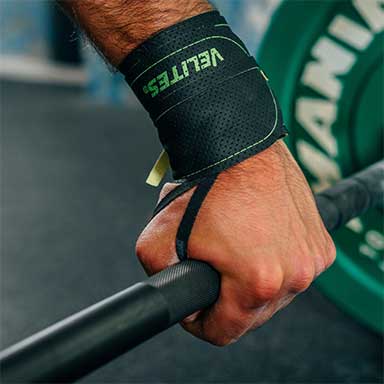
Core Wristbands
Use the code: ANABELPUMP for discount
I would reserve the Powerlifting type wrist straps for heavy barbell lifts such as the bench press, shoulder press and its variants.
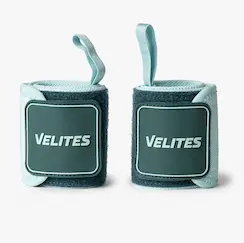
Nylon Wristbands
Use the code: ANABELPUMP for discount
Bandages with tape I would leave them for those cases in which the physiotherapist recommends their use.
Conclusion
Therefore, taking into account these points and what we have discussed above:
Wrist straps can be an interesting tool to be able to move high loads or medium-low loads at high repetitions.
To perform WOD's with exercises that may subject the wrist to high stress. And, in rehabilitation, it can be very useful to be able to introduce weight-bearing exercise in the initial stages along with the use of bandages when necessary.
Frequently Asked Questions
Do wristbands really work?
Yes, they are useful as long as they are used properly and correctly.
Do I need wrist straps if I am a beginner?
Not always. If your technique is good and you don't use aggressive loads, you can start without them. But as soon as you start moving kilos, they will help.
Rigid or flexible?
It depends on your style: if your workout has a lot of heavy loads, look for a stiffer option. If you do a lot of mixed WODs, a mixed or nylon option may give you a better experience.
Use them from the first set or only for demanding sets?
Best reserved for the most demanding sets. That way you let your wrists work on their own in warm-ups.
Is one needed for each wrist?
Yes, always work in pairs so as not to generate imbalances.
In which movements are they used?
In very demanding movements or movements that can compromise the joint such as the snatch or OHS I recommend wearing them, especially if we move high loads or perform a lot of volume (in a WOD), unless we have very good mobility and have developed excellent strength and tolerance to the load.
Should I wear wrist braces if I am in pain?
In the presence of injury or pain, wearing wristbands will not automatically make the symptoms disappearHowever, it can help us in these periods of recovery from injuries or painful processes to introduce exercise or tolerate loads that will later have a positive impact.