CrossFit Belts review and analysis
|

If you have been in the box, you know that the question is not yes wear a belt, but when and which choose. A poorly selected or incorrectly worn lifting belt is worse than wearing nothing at all, as it can give you a false sense of security while weakening your core natural.
As an athlete and coach with years of barbell experience, I've seen the most common mistakes: the Powerlifting belt that strangles on Burpees, or the too-loose Velcro belt that serves no purpose.
The belt is a piece of technical equipment. Its true mission is to assist you in the Intra-Abdominal Pressure (IAP), turning your torso into a rigid and stable cylinder for your heaviest lifts.
In this definitive analysis of this CrossFit accessory, Let's demystify the belts. I'll explain the science behind the stabilization of the core, I will show you why the Nylon/Velcro is the star material for the versatility of a WOD, and I will give you my strict rules about when and when not to you must depend on it.
If you want to safely increase your Squat or Deadlift without sacrificing your CrossFit versatility, this is your starting point.
This post contains affiliate links for which we receive a small commission and that in no case means a price increase for you. Thank you for your support.
Why do I need a belt? The real function (Intra-abdominal pressure)
The biggest mistake is to think that a belt supports your lumbar as a girdle. Its real function is to assist you in the Valsalva maneuver (force breathing) to increase the Intra-Abdominal Pressure (IAP).
When you tighten the belt, you create a rigid outer wall. When you take in air and push the abdomen toward that wall, the PIA is triggered. This pressure acts like a internal hydraulic cylinder which gives stability to your spine, reducing the risk of flexion and improving the transfer of force through the trunk.
It also helps to prevent the lower back from curving during deadlifts and squats. When the lifts are above the head, helps to avoid hyperextension of the same area.
But the truth is that, in practice, the belt is often used incorrectly in the expectation that the accessory will help with core activation work. In this way, the athlete might get the bad habit of not concentrating so much on activating this zone.
What is a crossfit lumbar belt for? Case studies
The purpose of the crossfit belt is to give feedback to the athlete when they are properly activating their core to make their lift stronger, more stable and safer.
- WODs with Light Loads: If the weight is sub-maximal, use it to train your core natural.
- Dynamic and Gymnastic Exercises: Burpees, Box Jumps, Wall Balls, Toes-to-Bar or Kettlebell Swings. The belt limits flexibility and range of motion.

Types of Belts: Velcro vs. Leather (The Choice for the CrossFit Athlete)
The market is essentially divided into two types of belts, and the choice of material is critical in a dynamic sport like CrossFit:
|
Feature |
NYLON / VELCRO Belt (Recommended for CrossFit) . |
LEATHER / BUCKLE Belt (Powerlifting / Pure 1RM) |
|---|---|---|
|
Main Material . |
Nylon, fabric and Velcro closure of high resistance. |
Thick leather (usually 10mm or 13mm) with metal buckle or lever. . |
|
Adjustment during the WOD |
FAST and EASY. Tightens and loosens in 1-2 seconds. Allows transition from the lift heavy to the Burpees. . |
SLOW and SLOW. Requires time or tools to adjust tension. Not feasible in a WOD timed. |
|
Stiffness / Support |
Medium-High. Sufficient to increase Intra-Abdominal Pressure (IAP) in heavy lifting (80-90% of 1RM). . |
Maximum / Extreme. Offers the highest stiffness for maximum performance in Powerlifting. . |
|
Flexibility |
High. It adapts well to the back and allows a deep squat without digging in, and some trunk mobility. . |
Low. It is very rigid, which can interfere with the Clean & Jerk or very deep squats. . |
|
Durability |
Good (but the Velcro wears out with time and heavy use). . |
Maximum (The belt can last for decades if cared for). |
|
Best for: . |
WODs with Lifting interleaving, Olympic Lifting, Olympic Sessions, Olympic Metcon Heavy. . |
Deadlift, Squat and Bench Press at 1RM Pure. |
|
Average price . |
€30 - €60 . |
€60 - €150 . |
1. Nylon/Velcro Belts (The CrossFit Standard)
- Design: Wider at the back and narrower at the sides.
- Closing: Quick Velcro fastening.
- Advantages: Instant adjustment. You can press it for the lift heavy and loosen it in seconds for the gymnastic or cardio phase of the WOD. They are flexible and comfortable.
- Disadvantages: Less maximum support than leather; Velcro may wear over time.
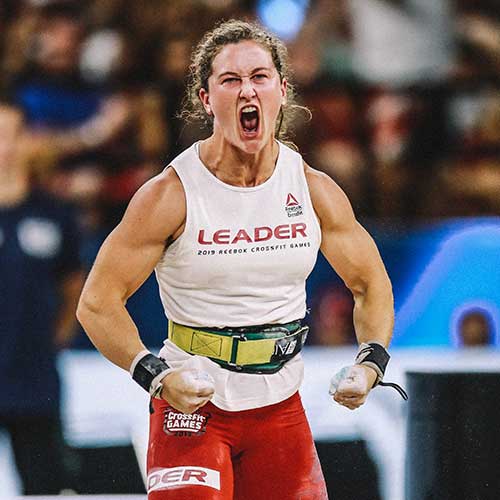
2. Leather Belts (Buckle or Lever)
- Design: Generally the same width (10mm to 13mm).
- Closing: Single/double tooth buckle or lever buckle.
- Advantages: Maximum rigidity and support. Ideal for Powerlifting, deadlifting and squatting at 1RM.
- Disadvantages: They are not practical for CrossFit. Their adjustment is slow (the lever requires a screwdriver to change size) and their extreme stiffness prevents the mobility needed for movements such as the Clean & Jerk or the Overhead Squats.
In both cases the belt must be adjusted properly, a loose belt does not provide support and a very tight belt can impede your breathing. That is why, after lifting, you will see that one of the first things to do is to unfasten the belt.
CrossFit Top Models Comparison Chart
Here's a comparison of the most popular Nylon/Velcro models in the CrossFit community:
|
Attribute / Model . |
Velites (The versatile) . |
Picsil 2nd generation (The minimalist) . |
Earwaves Atlas (Large stand) |
TrainLikeFight HR . |
|---|---|---|---|---|
|
Material Type . |
Nylon/Polyester |
Nylon/Synthetic Fabric |
Reinforced nylon |
Nylon/EVA |
|
Closing |
Velcro |
Velcro . |
Double or reinforced Velcro . |
Velcro |
|
Stiffness . |
High |
Media |
Very High (Rigid to be Nylon) |
High . |
|
WOD Versatility . |
Maximum. Designed for fast transitions. |
High. Light and flexible. |
High. Narrows to allow more mobility. . |
High. Versatile for facelift and WODs. . |
|
Best for... |
Athletes who compete and need the best balance between strength and speed. |
Beginners or intermediates looking for a light and comfortable model. . |
Athletes who prioritize maximum PIA support in heavy lifting. . |
Mid-level athletes looking for quality at a good price. . |
|
Average price . |
Use the code: ANABELPUMP . |
Use the code: ANABELPUMP | . |
When to use and when to avoid the belt
We cannot forget that the most important thing in weightlifting is our technique. When the base is good, the lifts are safe.
Working towards improving mobility, technique and quality of movement should be a priority above using a belt.
The belt can help a movement-conscious athlete to activate the lower back on the heavy lifts and provide extra support if something goes wrong, but the belt can never replace muscle activation by the athlete.
Wearing your belt incorrectly is the most common mistake I see. If you wear it all the time, your core will become lazy.
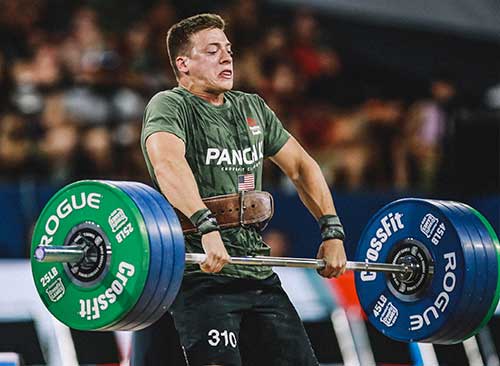
✅ Use the Belt ONLY if:
- Maximum loads: You are lifting above 80% of your 1RM in exercises such as Back Squat, Deadlift, Shoulder Press, Clean or Jerk.
- Fatigue series: You are in a heavy or long series where muscle fatigue makes it difficult to maintain the bracing (abdominal activation).
- Power movements: You need maximum stability to express explosive force, as in a Max Effort Clean.
The belt is mostly used in weightlifting exercises where a maximum or close lift is sought, it is not usually used in the WODs unless it involves heavy lifting.
Types of exercises: squats, dead weights, loaded/clean, jerks, snatches.
❌ Avoid the belt in:
- If our lifts need to improve because we have decompensations, we should focus on the accessory exercises that will help us to correct it.
- If the lifts are forced by a lack of mobility. We should emphasize this area.
- If we consider that our marks are low, we should increase our strength with a suitable program.
- Never use it in warm-ups or with low weights. Precisely in those cases the athlete must learn to become aware of how his body moves and gain control to activate different zones.
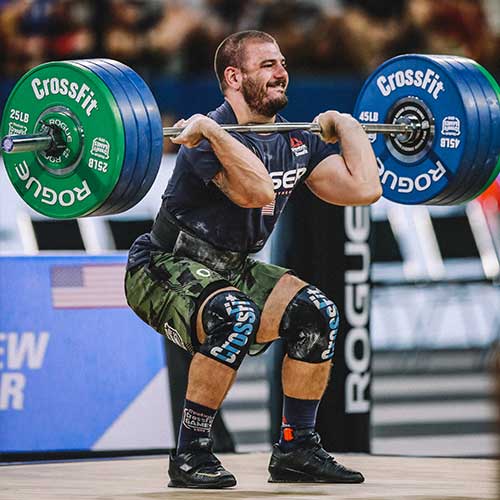
Contraindications of the lifting belt
The major drawback of wearing a belt is the extra pressure applied to the pelvic floor.
What is the pelvic floor?
The pelvic floor is made up of muscles, ligaments and tissues that connect with the nerves and, among other things, help to control bowel movements.
Think of a balloon as our core now put a tight belt on it. The pressure makes the balloon go down and all that force has to be resisted by our pelvic floor.
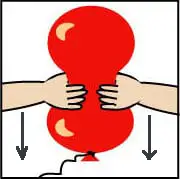
Belt use only aggravates pelvic floor problems.
What are the problems of a weak pelvic floor?
A weak pelvic floor that is not at the level of demand of the training sessions leads to incontinence. It affects mainly girls and they notice it especially in impact exercises such as the doubles, box jumps, heavy lifting and running.
Reminder! Just because it's common, doesn't mean it's normal. If you have incontinence problems the only way to get better is to see a specialist, a pelvic floor physiotherapist. You will never reverse this condition without help and ignoring it will only make it worse.
Frequently Asked Questions
Is it bad to use the belt in all WODs?
Yes, it is counterproductive. The deep stabilizing musculature (the core) is weakened if you always rely on external support. You should only use it to lift loads that demand maximum effort and stability, straining your core to work against the belt, not to replace it.
What is the difference between a 4-inch belt and a 6-inch belt?
Most CrossFit belts (Nylon/Velcro) are typically 4 inches wide. A wider belt (6 inches, sometimes with a tapered design) offers more contact surface and may slightly increase support, but may be uncomfortable for people with short torsoes or for deep squats. For CrossFit, 4 inches is the standard.
Does a leather Powerlifting belt work for CrossFit?
Not recommended. Powerlifting leather belts (10-13 mm thick, with buckle or lever) are designed for maximum stiffness, which is great for pure strength, but they make it slow and nearly impossible to transition to dynamic exercises in a WOD, such as rope climbing or sprinting. The Velcro is the best choice for CrossFit versatility.